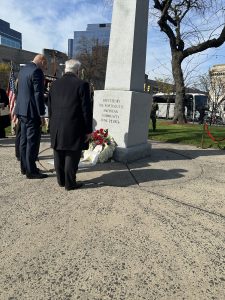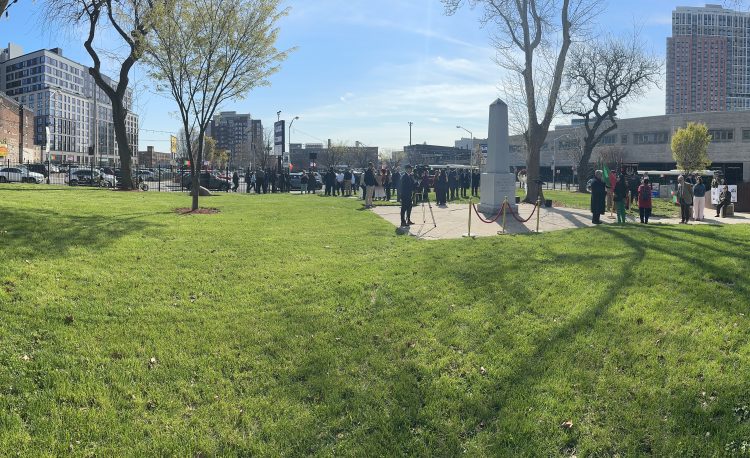
There are places in a city that people pass every day without realizing the history they hold.
Peter Francisco Park, in Newark’s Ironbound, is one of those places.
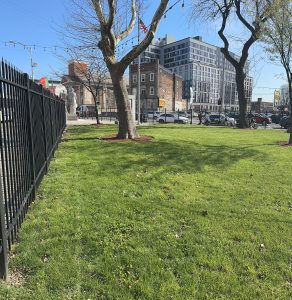
For many, it is simply a small park near Penn Station — a familiar public space, a point of arrival, a place marked by monuments and memory. But for the Portuguese-American community, it represents something far greater. It stands as a powerful symbol of heritage, sacrifice, immigration, and belonging. And for Sport Club Português, it carries an especially profound meaning: this is the very ground where the organization first began.
That fact alone should give anyone pause.
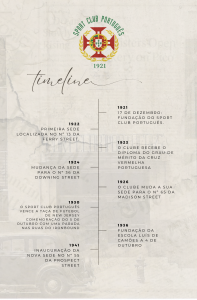
When Sport Club Português was founded in 1921, its original location was 13 Ferry Street, Newark — the same site where Peter Francisco Park stands today. In other words, long before the park became a civic place of tribute and remembrance, it was already the setting for one of the earliest and most important chapters in Portuguese-American community life in Newark.
There is something deeply moving about that.
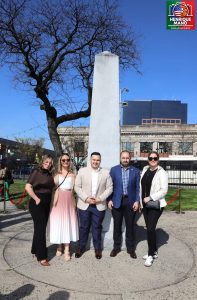
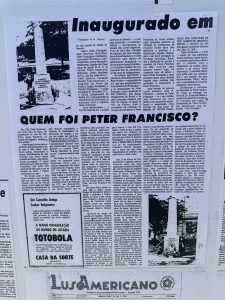
Today, Peter Francisco Park honors the Portuguese presence in America through monuments that speak to courage, identity, and service. The Peter Francisco monument, officially opened in 1976, pays tribute to the Portuguese-born patriot celebrated for his bravery in the American Revolutionary War. Nearby, the Ironbound Immigrants Memorial Monument, dedicated in 2018, stands as a tribute to the immigrant peoples who built the Ironbound with their labor, resilience, and dreams. The Luso-American veterans monument adds yet another layer of meaning, honoring those from the community who served this country with distinction.
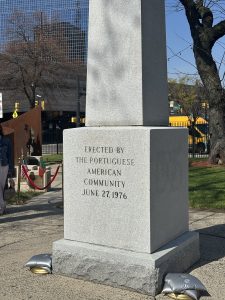 Taken together, these monuments tell a larger story. They speak of a people who came from elsewhere, planted roots here, helped shape this neighborhood, and gave of themselves both to their community and to the nation.
That alone would make Peter Francisco Park significant.
But its meaning becomes even richer when one remembers that this is also the place where Sport Club Português first opened its doors.
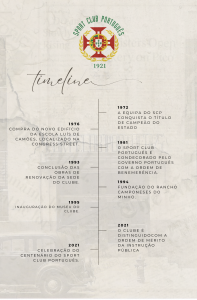
For more than a century, Sport Club Português has been one of the great pillars of Portuguese-American life in Newark. It has preserved language, culture, music, fellowship, and identity through generations of change. It has served as a home for immigrants, descendants, families, youth, and elders alike. Its story is, in many ways, the story of the Portuguese in Newark: one of hard work, perseverance, community pride, and the determination not to lose sight of one’s roots.
And that story began there.
It began not in abstraction, not in a history book, not in some distant retelling — but on that exact piece of ground in the Ironbound.
That matters.
It matters because communities are not built only through monuments and ceremonies. They are built through gathering places. Through first meetings. Through rented rooms, modest beginnings, and the courage of those who decide to organize, to belong, and to build something that will outlast them. Before there was the institution we know today, there was a first address, a first home, and a first act of faith in the future. For Sport Club Português, that place was 13 Ferry Street.
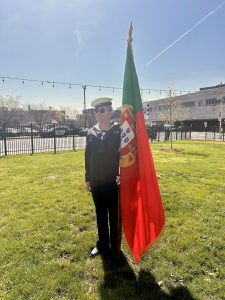
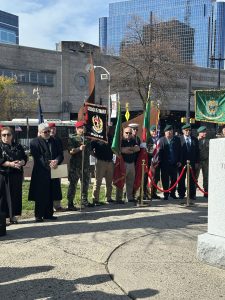
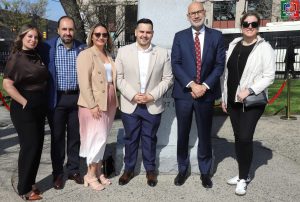
So when one stands in Peter Francisco Park during a ceremony organized by the Embassy of Portugal, or during any gathering that celebrates Portuguese heritage, one is not simply attending an event in a symbolic space. One is standing at the intersection of multiple histories at once. It is a place that honors a Portuguese hero of the American Revolution. A place that recognizes the immigrant foundations of the Ironbound. A place that remembers Luso-American veterans. And, for those who know the history well, a place where one of Newark’s most enduring Portuguese-American institutions was born.
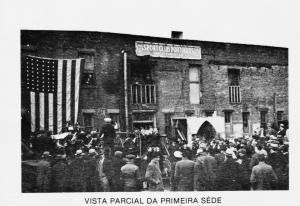 Few locations can carry so much meaning in so small a footprint.
Peter Francisco Park reminds us that the Portuguese-American story in Newark is not incidental. It is foundational. It is woven into the streets, the buildings, the institutions, and the public memory of the Ironbound. The park is not simply a tribute to the past. It is evidence of continuity. It shows that what earlier generations built still matters, still speaks, and still calls us to remember.
In a neighborhood constantly in motion, that reminder is invaluable.
It asks us to look more carefully. To see beyond the surface. To recognize that beneath today’s public square lies yesterday’s beginning. And for Sport Club Português, that beginning is not just historical trivia. It is a source of pride. It is a reminder that great institutions often start humbly, and that the places where they begin deserve to be remembered with the same respect we give to the monuments that come later.
Peter Francisco Park is, in every sense, a place of legacy.
It honors the Portuguese who fought, the immigrants who built, the veterans who served, and the community institutions that anchored generations of families in Newark. For Sport Club Português, it will always be more than a park. It will always be the place where it all began.
And that is something worth remembering every time we pass by.
For those interested in tracing that early journey more closely, Sport Club Português had several clubhouse locations before settling in its current home on Prospect Street in 1941. The club’s first home was at 13 Ferry Street, followed by 36 Downing Street, then 65 Madison Street, before finally moving in 1941 to its present location. That path tells its own story — one of growth, perseverance, and a community steadily building a permanent home in Newark.